

Goodwill partners to develop AI-powered textile recycling solutions
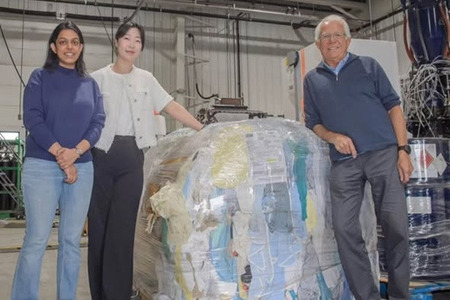
YarnsandFibers News Bureau 2026-08-03 13:49:26 – CanadaGoodwill Industries has partnered with Western University and Fanshawe College in Ontario, Canada, to develop new technologies that improve textile recycling and reduce the amount of donated clothing ending up in landfills. The collaboration focuses on converting textile waste into useful materials while using artificial intelligence (AI) to improve the sorting of donated items.
Researchers from Western University’s Institute for Chemicals and Fuels from Alternative Resources (ICFAR) and Fanshawe College’s Centre for Research and Innovation are using pyrolysis to convert textile waste into biochar. This process breaks down mixed-fibre textiles into a carbon-rich material that can improve soil health by helping it retain nutrients and support beneficial microorganisms.
The researchers explained that textile waste is difficult to recycle using conventional methods because many garments are made from blended fibres and contain dyes and chemical additives that complicate the recycling process. The research team is also exploring enzyme-based recycling methods that can break down natural fibres such as cotton and hemp into sugars. These sugars could be used as raw materials for future industrial applications.
In addition to recycling research, Western University is developing an AI-powered sorting system for Goodwill. Using smart cameras, the system will identify and classify donated items as they move along a conveyor belt, making it easier to recover reusable products before they are discarded.
related news




Market Intelligence
Ask for free sample Report

experience
Customer Base
dedicated team
Countries Served Worldwide
newsletter
Register below to receive our newsletters with latest industry trends and news!