

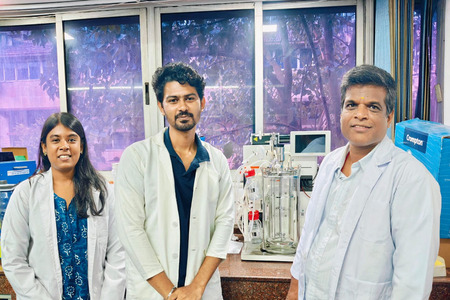
IIT-G researchers identify bacterium that degrades textile dye by 99%
YarnsandFibers News Bureau 2026-09-17 13:39:41 – IndiaResearchers at the Indian Institute of Technology Guwahati (IIT-G) have identified a bacterium that can degrade a toxic synthetic textile dye by nearly 99 per cent. The finding could provide a biological alternative to chemical-based wastewater treatment. The study found that the newly identified bacterium, Brevundimonas sp. AJZ05, degraded 98.50 per cent of Direct Blue-6 (DB-6) under optimised laboratory conditions.
The bacterium was collected from a local textile effluent discharge site. Researchers found that it produces azoreductase, an enzyme that breaks down the azo bond responsible for the dye’s colour and stability.
The researchers also examined the substances, known as metabolites, produced during the degradation process. Their analysis showed that these compounds were non-toxic after treatment with the bacterium. This is important because wastewater may look cleaner after its colour has been removed while still containing compounds that could be harmful.
The researchers also found that Brevundimonas sp. AJZ05 can tolerate several metal ions. This could be useful because industrial wastewater often contains several types of contaminants rather than a single pollutant.
related news



Market Intelligence
Ask for free sample Report

experience
Customer Base
dedicated team
Countries Served Worldwide
newsletter
Register below to receive our newsletters with latest industry trends and news!