

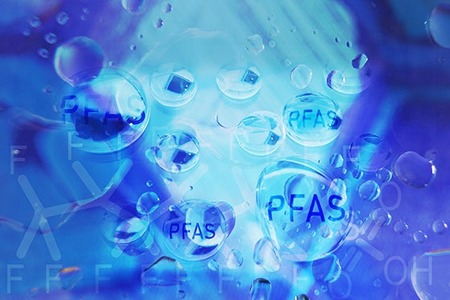
Researchers break down PFAS using UV-based treatments
YarnsandFibers News Bureau 2026-10-15 13:43:18 – USAResearchers at the University of California, Riverside, have investigated the chemical reactions involved in breaking down per- and polyfluoroalkyl substances (PFAS) using ultraviolet (UV) light and sulfite. Published in Nature Water, the study examines how the treatment process dismantles these persistent chemicals and could help improve methods for their removal from contaminated water.
PFAS have been widely used in textile treatments to provide water, grease and stain resistance, but their strong carbon-fluorine bonds make them highly resistant to environmental degradation.
The researchers found that UV light and sulfite generate highly reactive hydrated electrons that attack PFAS molecules and initiate the breakdown of carbon-fluorine bonds. This process releases fluorine into the water as fluoride ions, while hydroxyl radicals and hydroxide ions contribute to breaking carbon-carbon bonds in the remaining molecular structures.
The resulting shorter-chain compounds can undergo further defluorination, progressively breaking down the original PFAS molecules. According to the researchers, the study also revises some previously proposed degradation mechanisms by providing experimental evidence for the reactions involved.
The findings could help researchers optimise treatment conditions to achieve more extensive PFAS degradation and identify additional processes that could improve the destruction of residual compounds. Jinyong Liu, associate professor of chemical and environmental engineering at UC Riverside and the study’s corresponding author, said understanding the degradation mechanism provides a clearer basis for improving the technology.
related news




Market Intelligence
Ask for free sample Report

experience
Customer Base
dedicated team
Countries Served Worldwide
newsletter
Register below to receive our newsletters with latest industry trends and news!