

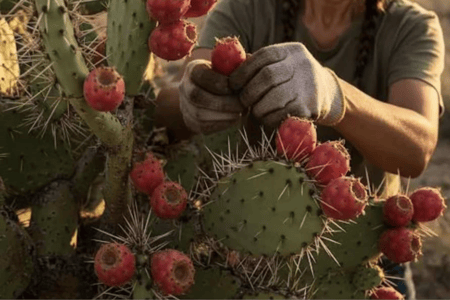
Prickly pear peel waste and microwave dyeing boost wool textiles performance
YarnsandFibers News Bureau 2026-06-18 15:59:28 – EgyptA new study published in Scientific Reports has demonstrated that prickly pear peel waste, when combined with microwave-assisted dyeing, can serve as an environmentally friendly natural dye for wool fabrics while enhancing color performance, antibacterial properties, and ultraviolet (UV) protection.
The research, conducted by scientists from the Dyeing, Printing and Textile Auxiliaries Department at the Textile Research and Technology Center in Cairo, Egypt, investigated the potential of agricultural waste as a sustainable alternative to conventional textile dyes. The team compared traditional mordant-assisted dyeing using 4 percent tannic acid with a mordant-free microwave-assisted process.
The results showed that microwave-assisted dyeing significantly outperformed conventional methods across multiple performance and sustainability metrics. The process reduced dyeing time and energy consumption while producing fabrics with higher color strength, improved wash and rubbing fastness, enhanced ultraviolet protection factor (UPF), and superior antibacterial activity.
In addition to improved textile performance, the microwave-assisted process generated wastewater with lower biochemical oxygen demand (BOD), chemical oxygen demand (COD), and total dissolved solids (TDS), indicating a reduced environmental impact.
The study found that wool fabrics dyed using prickly pear peel extract under microwave-assisted conditions achieved commercially acceptable fastness properties, confirming the viability of the agricultural waste-derived dye for textile applications
related news


Market Intelligence
Ask for free sample Report

experience
Customer Base
dedicated team
Countries Served Worldwide
newsletter
Register below to receive our newsletters with latest industry trends and news!