

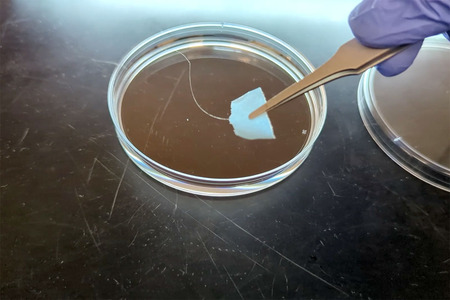
Engineers develop recyclable protein-based textile
YarnsandFibers News Bureau 2026-05-19 13:55:53 – USAEngineers at Washington University in St. Louis have developed a new protein-based textile material aimed at reducing microfiber pollution and improving textile recycling through a closed-loop production system.
The research was published in the peer-reviewed scientific journal Advanced Materials and was led by Fuzhong Zhang, the Francis F. Ahmann Professor of Energy, Environmental and Chemical Engineering at the university’s McKelvey School of Engineering.
The new textile materials are produced in bioreactors, which are closed systems that use genetically engineered microbes to manufacture substances. According to the researchers, the protein-based fibres can be dissolved and remade into new fibres through multiple recycling cycles while still maintaining their strength and performance.
The material, called SAM, combines protein structures inspired by mussels, spider silk, and amyloids, which are proteins known for creating strong fibrous structures. The research team explained that this hybrid structure was designed to separately manage durability and recyclability, which has long been a challenge in textile and polymer recycling systems.
The mussel-inspired protein components help improve recyclability while also reducing shrinkage when exposed to water. Researchers further noted that if small particles are released during washing, they would biodegrade naturally instead of persisting like traditional synthetic microplastics.
The team also demonstrated that recycled proteins from the material could be reused to create adhesive hydrogels before being recycled again into fibres or gels. This could expand the material’s future applications beyond textiles alone.
related news






Market Intelligence
Ask for free sample Report

experience
Customer Base
dedicated team
Countries Served Worldwide
newsletter
Register below to receive our newsletters with latest industry trends and news!