

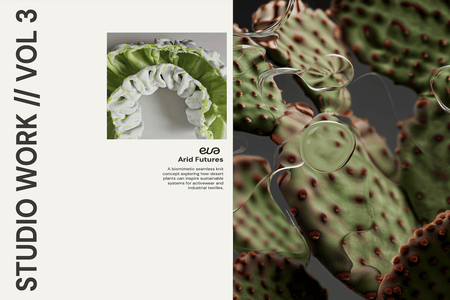
Studio Eva de Laat explores desert-inspired knitwear
YarnsandFibers News Bureau 2026-06-01 14:57:09 – NetherlandsAs climate conditions become more extreme, textile innovation is moving beyond improving performance. In its latest research project, Studio Work // Vol. 3 – Arid Futures, Studio Eva de Laat investigates how biomimicry and seamless knitting technologies can be combined to create textiles that respond to heat, moisture, and changing atmospheric conditions.
Instead of relying only on advanced technology, the study draws inspiration from desert plants such as cacti and succulents, which have evolved highly efficient ways to survive in harsh climates.
The research translates these biological strategies into knitting structures. It explores how seamless knitting technology, which already enables features such as targeted compression, ventilation zones, spacer fabrics, and moisture-management channels, could be further developed to create textiles that actively respond to environmental conditions.
Using engineered rib patterns, three-dimensional spacer constructions, and strategically varied fabric densities, seamless knit structures can imitate the folds of cacti. These designs create airflow channels and thermal insulation layers directly within the fabric, turning garments into functional systems rather than simple coverings.
A key idea behind the project is that seamless knitting should be viewed not only as an efficient manufacturing method but also as a versatile technology platform. By combining existing textile technologies with future possibilities such as moisture-responsive yarns and adaptive ventilation systems, the research presents knitted textiles as a potential solution for climate adaptation.
related news



Market Intelligence
Ask for free sample Report

experience
Customer Base
dedicated team
Countries Served Worldwide
newsletter
Register below to receive our newsletters with latest industry trends and news!