

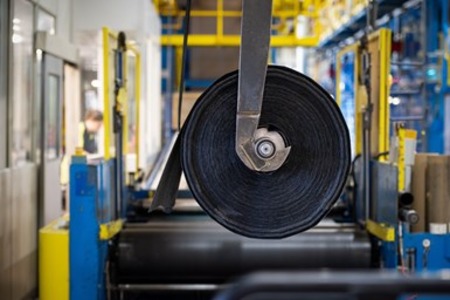
James Cropper scales aligned nonwoven fiber production
YarnsandFibers News Bureau 2026-03-04 16:45:04 – United KingdomJames Cropper Advanced Materials has introduced the Vectis fiber technology platform to solve the challenge of achieving high fiber alignment in discontinuous nonwoven materials at an industrial scale.
Although aligning short or recycled fibres has been possible in laboratory and pilot settings, scaling this performance to commercial production widths, weights and volumes has remained difficult. The Vectis platform addresses this issue by enabling large-scale manufacturing of aligned nonwoven materials using existing nonwoven production infrastructure.
Through the Vectis platform, the company produces Unimat, an aligned nonwoven fibre mat designed to be combined with established resin systems in composite manufacturing. Unimat provides directional mechanical strength while maintaining the flexibility and process compatibility required for complex composite parts. It is supplied as a dry, non-impregnated material and can be used in current composite production methods.
Unlike earlier aligned fibre concepts, Vectis runs on James Cropper’s existing industrial nonwoven equipment. This allows production at widths of up to 1.2 metres and across a broad range of areal weights from 20 to 200 gsm, supporting high-volume manufacturing.
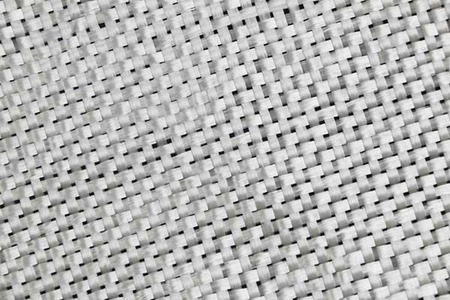
Unimat achieves fibre alignment levels close to 95 percent and can be produced using various raw materials, including recycled carbon fibre, post-industrial waste, virgin carbon fibre, glass fibre and hybrid blends. The material offers strong formability, enabling complex shapes to be created without wrinkles or fibre distortion. It also supports higher fibre volume fractions compared to traditional recycled nonwovens.
related news



Market Intelligence
Ask for free sample Report

experience
Customer Base
dedicated team
Countries Served Worldwide
newsletter
Register below to receive our newsletters with latest industry trends and news!