



Oxman uses engineered bacteria to grow dye pigments on knitted silk
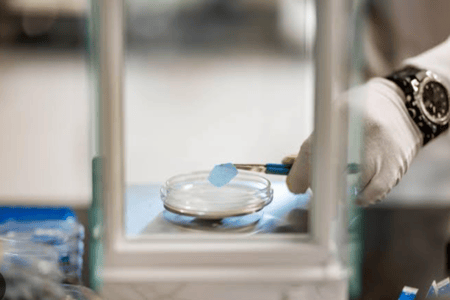
YarnsandFibers News Bureau 2026-11-04 13:38:05 – USADesign and research company Oxman has developed Vigils, a project demonstrating how engineered bacteria can produce indigo and melanin pigments directly on knitted silk. The process combines computer-controlled knitting with genetic engineering to control where pigments develop. Selected fibres within the three-dimensional silk structure are coated with chemical inducers that activate specific genetic pathways when exposed to the bacteria.
The process is showcased through four prototype capes, titled Velum I to IV, in which bacterial cultures are sprayed onto the fabric to generate colour over approximately 24 hours. The resulting patterns are guided by the textile’s knitted structure and chemical signals, positioning the fabric itself as a biological pigment-production environment. The project demonstrates microbial coloration at prototype scale, with one cape produced per batch.
Oxman uses a modified strain of Escherichia coli BL21, with anhydrotetracycline (aTc) and C14-HSL as inducers. The growth medium contains amino acid precursors, which support melanin and indigo production, respectively, alongside xanthan gum to control liquid movement across the suspended textile. According to the company, soluble indigo precursors oxidise into insoluble pigment within the fabric, avoiding the chemical reduction step used in conventional indigo dyeing. Following coloration, the garments are washed and dried, with the chemical inducers removed during the first wash.
Oxman has conducted preliminary household wash-and-dry and handling evaluations, reporting no observed pigment migration or loss, but industry-standard durability testing remains outstanding. The company identified wash, rub and lightfastness assessments under ASTM standards as next steps, while noting that performance and durability are still being validated.
related news



Market Intelligence
Ask for free sample Report

experience
Customer Base
dedicated team
Countries Served Worldwide
newsletter
Register below to receive our newsletters with latest industry trends and news!
